Does Costa Mesa Water Need a Softener? What Mesa Water's Numbers Say
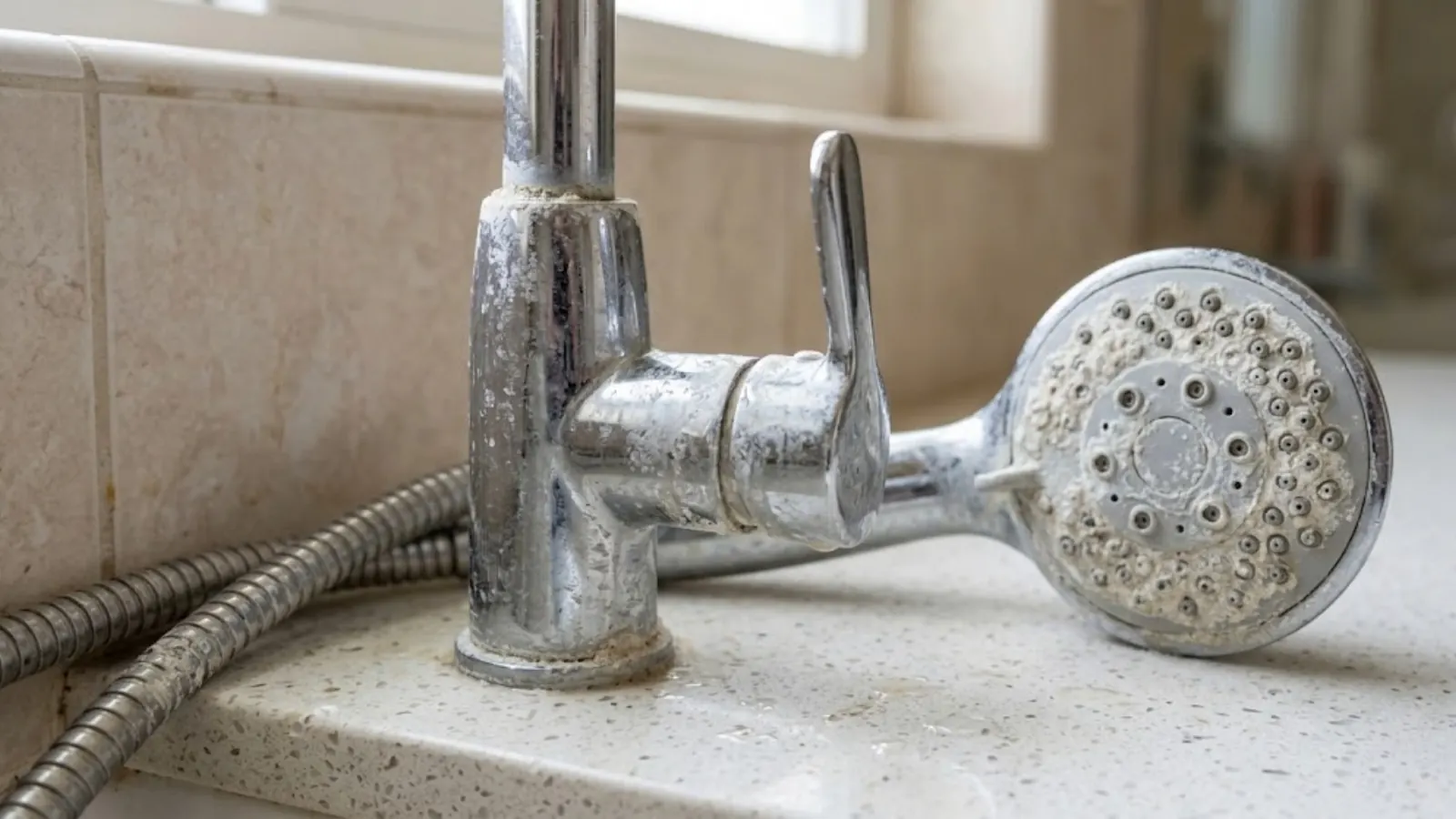
Costa Mesa water is moderately hard on average, not very hard. Mesa Water's 2025 Water Quality Report lists 2024 groundwater hardness at an average of 109 parts per million, about 6.4 grains per gallon, with a range from roughly 1.2 to 14 grains depending on the source mix.
Many homes do fine without a softener. It makes the most sense for homes that test toward the hard end, households with a tankless water heater, and anyone bothered by spotting and scale.
Here is how to read those numbers, how to test your own tap, and how to decide. Homes in Fountain Valley get water from a different utility, so these figures apply to Mesa Water customers.
The numbers, in context
Hardness is reported in parts per million (ppm) or grains per gallon (gpg). One grain per gallon is about 17.1 ppm.
| Measure | Reported value | In grains per gallon |
|---|---|---|
| Average hardness | 109 ppm as calcium carbonate. | About 6.4 gpg. |
| Range of detections | 21.3 to 237 ppm. | About 1.2 to 14 gpg. |
| Average calcium | 33 ppm. | The main hardness mineral. |
| Average magnesium | 6.4 ppm. | The smaller share. |
Common water-industry scales put about 3.5 to 7 gpg in the moderately hard range and above about 10.5 gpg in the very hard range. Costa Mesa's average sits at the upper end of moderate.
Why the range is so wide
Mesa Water blends water from different wells. Most comes from shallow wells in the Orange County Groundwater Basin, and a share comes from deep amber-water wells at the Mesa Water Reliability Facility, which the district describes as naturally soft. The blend reaching your street can differ from your neighbor's a mile away, and it can shift over time.
That is why the average alone does not tell you what is in your glass. A reading at your own tap is the only number worth basing a purchase on.
Some Costa Mesa addresses are served by IRWD instead, with a different supply and different figures. Your water bill tells you which utility you have.
Test your own water
- Use cold water from the kitchen. Run it for a minute before sampling.
- Use a hardness test strip or kit. Many hardware stores sell inexpensive ones.
- Read in grains per gallon. Convert from ppm by dividing by about 17.1 if needed.
- Test twice, weeks apart. The blend can change, so two readings are better than one.
A plumber can test at the visit too. Ask for the reading in writing with any softener quote.
Who benefits, and who can skip it
| Situation | Softener worth it? | Why |
|---|---|---|
| Tap tests above about 10 gpg. | Likely yes. | Scale builds noticeably at that level. |
| Tankless water heater in the home. | Often yes. | Scale reduces output and adds descaling visits. |
| Tap tests around 3 to 7 gpg, tank heater. | Optional. | Yearly flushing often handles it. |
| Main concern is taste or chlorine smell. | No. | That calls for filtration, not softening. |
| Local rules restrict salt discharge. | Consider salt-free options. | Check with your sewer agency. |
Salt-based or salt-free
A salt-based softener swaps hardness minerals for sodium and gives the familiar soft-water feel. It needs salt refills and discharges brine to the sewer when it regenerates. California law allows local agencies to restrict salt-discharging softeners, so check current rules with your sewer agency before installing one.
Salt-free conditioners change how minerals behave so they scale less, without removing them. Water does not feel soft, but equipment sees less buildup and there is no brine discharge.
Whichever you choose, the regeneration drain must discharge through an air gap under the California Plumbing Code, which is based on the Uniform Plumbing Code (UPC).
What a softener will not fix
Softening does not remove chloramine, the disinfectant Mesa Water uses. If the water tastes or smells of disinfectant, water filtration with catalytic carbon is the right tool. Softening also does not fix rusty water from old pipes, which is a plumbing problem, not a water chemistry one.
It will not rescue a water heater that is already failing. If your tank is rumbling with sediment or leaking, see our water heater repair page first.
Sizing a softener for your household
If you do decide on a softener, size it from your own hardness reading and your household's water use, not from a generic chart. A softener's capacity is rated in grains, and it regenerates after removing that many grains of hardness. A system that is too small regenerates constantly, wasting salt and water. One that is far too large can let water sit in the resin tank between regenerations.
The math is simple. Multiply your hardness in grains per gallon by the gallons your household uses in a day. That is the daily grain load, and a good installer uses it to set both the system size and the regeneration schedule. At Costa Mesa's moderate average, many households need a smaller unit than the ones sold for harder inland water.
Cheaper ways to manage moderate hardness
At a moderate level, simple maintenance goes a long way. Flush a tank water heater once a year. Descale a tankless unit every one to two years. Soak showerheads and faucet aerators in white vinegar when flow drops. Wipe glass shower doors after use.
If after a year of that you still want softer water, a system is a reasonable upgrade. Our softener installation page starts every quote with a test at your tap.
Water hardness questions
Mesa Water reported a 2024 groundwater average of about 6.4 grains per gallon, with a range of about 1.2 to 14. That is moderately hard on average.
Not always. Test your tap first. A softener makes most sense above about 10 grains per gallon or with a tankless water heater.
No. Softeners target hardness minerals. Catalytic carbon filtration handles chloramine taste and smell.
California lets local agencies restrict them. Check current rules with your sewer agency before installing.
Yes, IRWD has its own supply and report. Check your bill to see which utility serves you.
A salt-based softener exchanges hardness minerals for sodium, so softened water contains some added sodium. People watching sodium often leave the kitchen cold tap unsoftened or add a drinking water filter.
Well-maintained systems commonly last many years. The resin and control valve are the parts that wear, and both can often be serviced rather than replacing the whole unit.
Often, if there is space near your unit's main line and a drain, and the association allows it. Salt-free units are simpler where there is no drain nearby.
Sources
- Mesa Water District, 2025 Water Quality Report and Water Quality page.
- Mesa Water District, Mesa Water Reliability Facility.
General information only. For your home, a plumber on site has the final word.