Slab Leaks in Postwar Costa Mesa Ranch Homes: What to Watch For and What to Do
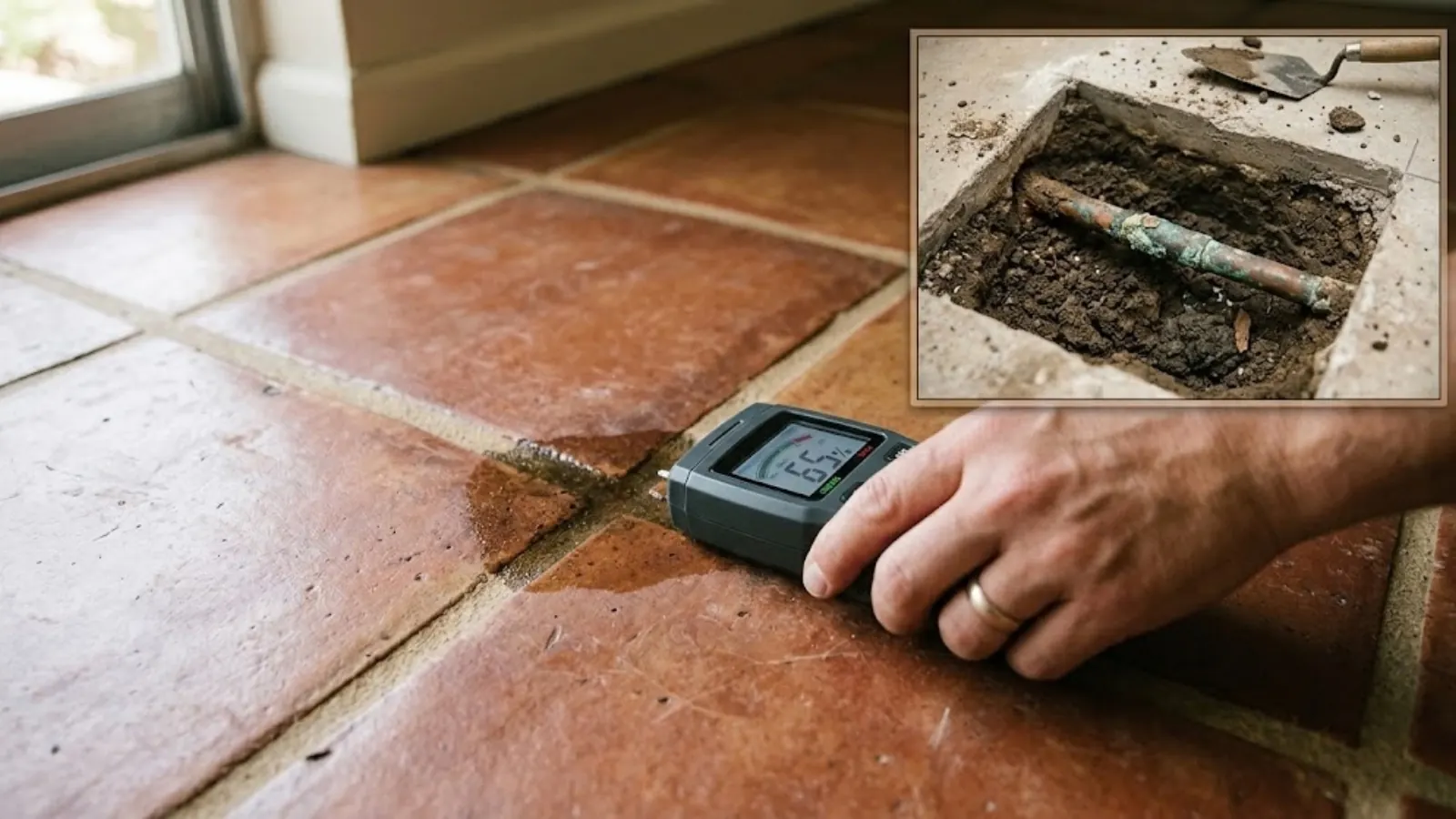
A slab leak is a leak in a water line that runs in or under a home's concrete floor. In Costa Mesa, they show up most in single-story ranch homes from the 1950s and 1960s, where supply lines were laid under the slab and have now been in service for 60 years or more.
The early signs are indirect: a warm spot on the floor, the sound of water running when nothing is on, a meter that keeps turning, or a water bill that jumps.
This guide explains why these homes get slab leaks, how to confirm one, and how to choose the right fix.
Why these homes, and why now
Costa Mesa's building boom came right after the city incorporated in 1953. Many homes from that era are single-story ranch houses on concrete slabs, with copper or galvanized supply lines laid beneath the floor before the concrete was poured.
Decades later, those lines wear in predictable ways. Pipe that touches concrete or gravel can abrade as it expands and contracts. Hot water lines, which expand the most, tend to fail first. Once one pinhole appears, it is common for others to follow on the same line, because the whole run is the same age.
Early signs worth taking seriously
None of these alone proves a slab leak. Two or more together are worth a test.
- A warm or hot patch on tile or concrete, often near the kitchen, a bathroom or the water heater.
- The sound of running or hissing water under the floor with every fixture off.
- The water meter's leak indicator moving when nothing in the house is using water.
- A water heater that seems to run more often than it used to.
- Damp carpet, cupping wood floors or cracked grout with no fixture nearby.
- A jump in the water bill that household habits do not explain.
How a slab leak is confirmed and located
- Meter test. With everything off, a moving leak indicator confirms water is escaping.
- Isolation. Closing valves separates the hot side from the cold side and the service line from the house.
- Thermal imaging. A hot line leak shows as a warm trail across the slab.
- Acoustic listening. Floor microphones pick up the sound of water escaping under pressure.
- Mark the spot. The leak is narrowed to a small area before anything is opened.
The detection process is covered in detail on our leak detection page.
Repair, reroute or repipe: how to choose
Once the leak is marked, three honest options remain. The pipe's condition matters more than the single leak.
| Option | Choose it when | Trade-off |
|---|---|---|
| Spot repair through the slab | It is the first leak and the rest of the line tested sound. | Fixes today's leak but leaves the old line in place. |
| Reroute the line | The line has leaked before or runs under costly flooring. | New pipe runs through walls or the attic, and the old line is abandoned. |
| Whole-house repipe | Leaks are showing up on several lines. | Largest job, but it resets the whole supply system. |
Our slab leak repair page prices these side by side, and repiping covers the whole-house option.
What insurance usually does and does not pay
Homeowner policies vary, so read yours. In general, many policies pay for water damage from a sudden leak, and some pay to access the pipe by breaking and restoring the floor. The failed pipe itself is usually treated as wear and not covered.
Some insurers will pay toward a reroute in place of breaking the slab, since it avoids tear-out costs. Ask before you choose a method. Keep the leak detection report and photos of any damage, since adjusters commonly ask for both.
A slow slab leak that has run for months may be treated differently from a sudden one. Acting quickly on the first signs helps both the repair and the claim.
Living with it until the repair
A slab leak is rarely a flood, but it should not wait long. Water under a slab can soften the soil, damage flooring and, in a hot line, waste energy heating water that disappears into the ground.
If the leak is on the hot side, closing the cold inlet valve on the water heater stops the loss while leaving cold water on in the house. If it is on the cold side, you may need to close the main shutoff between uses. A plumber can often isolate the leaking branch so most of the house keeps water.
Neighbors, same era, same problem
Because whole streets in Costa Mesa, Fountain Valley and Westminster went up in the same years, homes on the same block often share the same plumbing history. If a neighbor has just repiped after slab leaks, it is worth checking your own meter. For homes in those nearby cities, see our Fountain Valley page for local notes.
Hot or cold side: why it matters
Knowing which side is leaking changes the plan. A hot-side leak wastes both water and the energy used to heat it, and it can be stopped overnight by closing the water heater's cold inlet. A cold-side leak runs at full street pressure all the time, so it usually needs the main shutoff closed between uses.
After the fix
Whatever the method, the new pipe should be pressure-tested before the floor or wall is closed, the same acceptance test the California Plumbing Code, based on the Uniform Plumbing Code (UPC), uses for new piping. Keep the permit and invoice with your home records. A documented reroute or repipe answers a buyer's questions later.
It is also worth checking incoming water pressure. Pressure above 80 psi stresses every line in the house, and the code calls for a reducing valve at that level.
Slab leak questions
Look for a warm floor, running-water sounds, a moving meter indicator with everything off, or a sudden bill increase. A leak test confirms it.
Usually not a flood, but it should be handled within days, not months. Isolate the line if you can.
Often, if the line has leaked before or runs under expensive flooring. A single first leak in sound pipe can be fixed with a spot repair.
Many policies cover resulting water damage and sometimes access costs, but not the worn pipe. Check your policy.
Water under a slab can wash out or soften the soil beneath it over time. That is one reason not to leave a leak running.
Sources
- City of Costa Mesa.
- California Building Standards Commission, California Plumbing Code (Title 24, Part 5).
General information only. For your home, a plumber on site has the final word.