Tree Roots in Your Sewer Line: Why Older Costa Mesa Laterals Attract Them
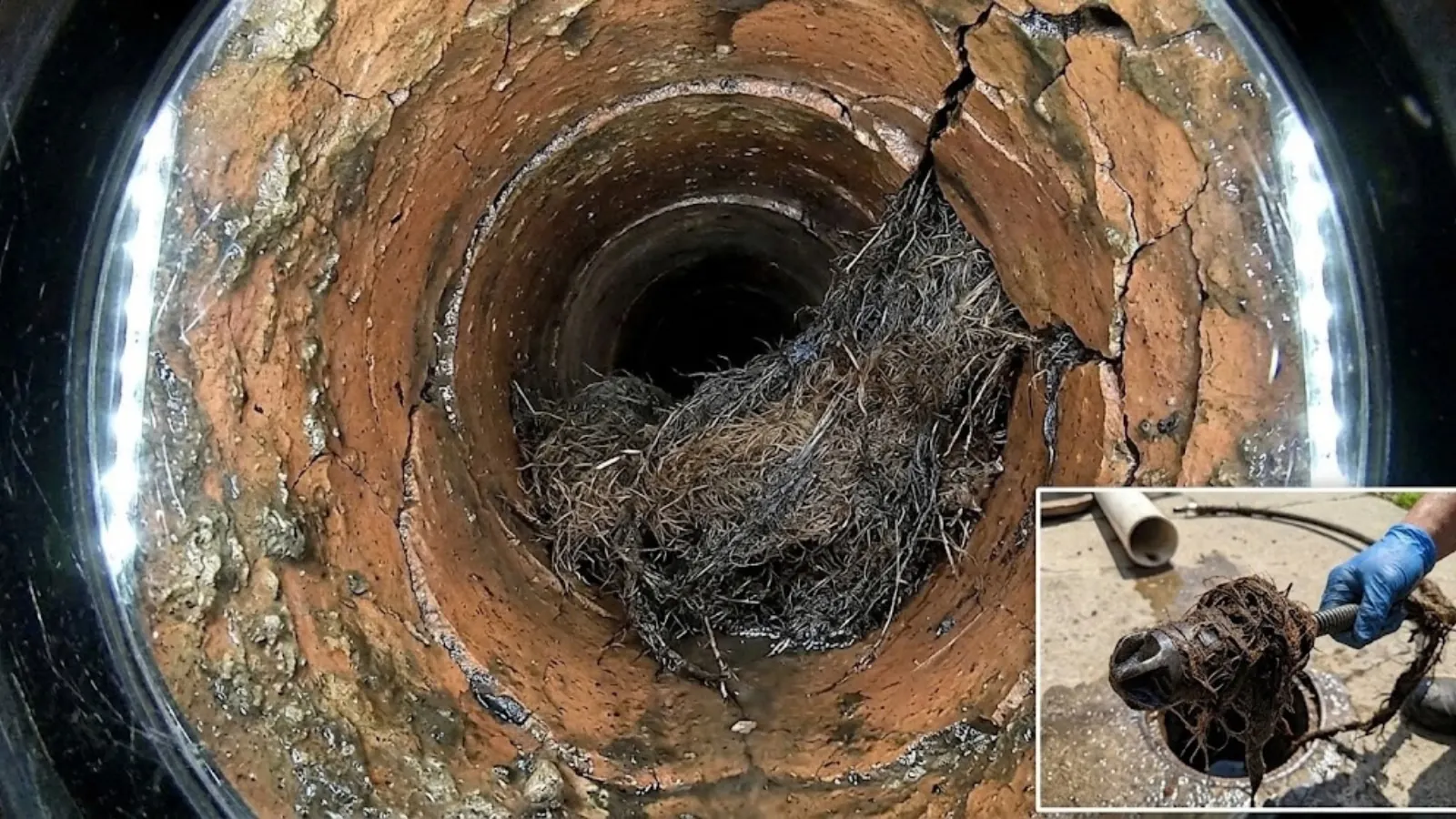
Tree roots get into sewer laterals through joints and cracks that already exist. Moisture seeping from a tired joint pulls them in, and once inside they grow until they catch paper and waste and block the line. In Costa Mesa, the problem is most common in homes from the 1950s and 1960s with clay or cast iron laterals running under mature trees.
Clearing roots restores flow, but it does not stop them coming back. This guide explains why, and what does. The same problem is common in Garden Grove, where owners also maintain the lateral to the public sewer.
How roots get in
Older laterals were often built from short sections of clay pipe, with a joint every few feet. Over decades, joints loosen and small gaps open. Vapor and a trickle of water escape, and nearby roots follow the moisture to the gap.
A root enters as a fine hair, then thickens inside the pipe where there is water and food. Within a few seasons it can form a mat that catches everything flowing past. The pipe itself is often still in one piece. The weak point was always the joint.
Ground movement plays a part too. Southern California sees small earthquakes regularly, and the Newport-Inglewood fault zone runs along this stretch of the coast. Decades of small movements can shift pipe joints out of line, which opens more room for roots.
Signs roots may be in your line
- Slow drains in several fixtures at once, especially the lowest ones.
- Gurgling from a toilet when the washer or tub drains.
- A main line that needs clearing every year or so, often in the same season.
- Backups after heavy use, such as when guests stay over.
- Mature trees or large shrubs between the house and the street.
Ways to deal with roots, compared
| Method | What it does | How long it lasts |
|---|---|---|
| Cable machine with a cutting head | Cuts roots so water flows again. | Months to a year or so. |
| Hydro jetting | Cuts fine roots and scours the pipe wall. | Usually longer than cabling alone. |
| Pipe lining | Seals joints from the inside with a new jointless liner. | Long term, on sound pipe. |
| Spot repair | Replaces the damaged section and joint. | Long term at that joint. |
| Full replacement | New jointless or tightly jointed pipe. | Long term for the whole lateral. |
Clearing is covered on our clog clearing and hydro jetting pages. Lasting fixes are on our sewer repair page.
Why clearing alone keeps you coming back
Cutting roots leaves the root system alive in the soil and the gap in the joint open. The roots regrow toward the same moisture. That is why root clogs tend to come back on a schedule.
Clearing is still the right first move in a backup. The home needs to work tonight. But if the line has been cleared more than once, the next step should be a camera inspection to see how many joints are affected and whether the pipe is otherwise sound.
A sensible plan for a root-prone lateral
- Clear the line. Restore flow with a cable machine or jetting.
- Film it. A camera run shows how many joints roots use and where they are.
- Pick the fix. One or two joints suggest spot repair or lining. Many suggest replacement.
- Use the rebate. Costa Mesa Sanitary District residents may qualify for help with the inspection cost.
Details on the rebate are in our guide to sewer camera inspections.
What about root-killing products?
Foaming root treatments sold for sewer lines can slow regrowth for a while. They do not seal the joint, so they are a delay, not a fix. Follow the label closely, never mix chemicals, and tell your plumber what you have used before they open the line.
Removing the tree is rarely necessary. A sealed or replaced pipe gives roots nothing to find, and the tree can stay.
Which trees cause the most trouble
Any tree with an aggressive, water-seeking root system can find a leaking joint, and large, fast-growing trees planted close to the line are the usual suspects. Mature trees in older neighborhoods have had decades to spread, which is one reason roots are such a common finding on Eastside and Mesa Verde laterals.
Distance matters more than species. Roots spread well beyond the canopy, so a tree that looks far from the sewer line may still reach it. When planting new trees, keeping them well away from the lateral's path is the cheapest root control there is.
What a camera shows about roots
On video, root intrusion usually looks like a fringe of fine hairs at a joint, or a dense mat that fills the pipe. The footage counter shows exactly how far from the entry point each root site sits, and a locator on the camera head shows its depth.
That precision matters. Two root sites near the house might be handled with spot repairs, while a dozen along the whole run points to lining or replacement. Without the footage, any quote for a lasting fix is a guess.
Keep the video. If you sell the home, it shows a buyer exactly what was found and what was fixed.
Who pays for root damage
In Costa Mesa, the owner is responsible for the lateral all the way to the district main, including the section under the sidewalk and street. That holds even when the roots come from a city street tree. Root damage is also commonly excluded from homeowner policies as wear, though some offer a service line endorsement.
The California Plumbing Code, based on the Uniform Plumbing Code (UPC), governs how a lateral is repaired, and the work needs a permit. Street sections also need a city encroachment permit.
Root intrusion questions
They usually enter through existing gaps at joints or cracks. As they grow, they can widen those gaps and crack weak pipe further.
It varies, but many lines need clearing again within a year. A camera inspection shows whether a repair would stop the cycle.
Usually not. Sealing or replacing the affected pipe removes what attracts the roots.
Often not, since it is treated as wear. Some policies offer service line coverage. Check yours.
In Costa Mesa the lateral is the owner's responsibility all the way to the main, including under the street.
Roots usually cause slow drains that worsen over months and return after clearing, often near trees. Grease clogs start in the kitchen line. A camera run tells them apart in minutes.
Sources
- Costa Mesa Sanitary District, homeowner sewer responsibilities.
- Costa Mesa Sanitary District, Sewer Inspection Rebate Program.
General information only. For your home, a plumber on site has the final word.